
Table of Contents
Are Your Google Ads Wasting Money on Clicks You Already Own?
You’re running a successful Google Ads campaign. The clicks are coming in, the conversions are tracking, and everything looks great on the surface. But what if a significant chunk of that budget—as much as 20% or more—is being spent on traffic you would have gotten for free anyway?
It sounds counterintuitive, but it happens all the time. This hidden budget drain is called SEO and PPC overlap, and if you’re not actively looking for it, you’re almost certainly wasting money. It’s the digital equivalent of paying for advertising space right in front of your own shop window.
The Hidden Cost of Success: What is SEO & PPC Overlap?
SEO (Search Engine Optimisation) and PPC (Pay-Per-Click) are two sides of the same coin. SEO is the long-term effort to get your website ranking highly in the organic (free) search results. PPC, primarily through Google Ads, is the process of paying to appear at the top of the search results instantly.
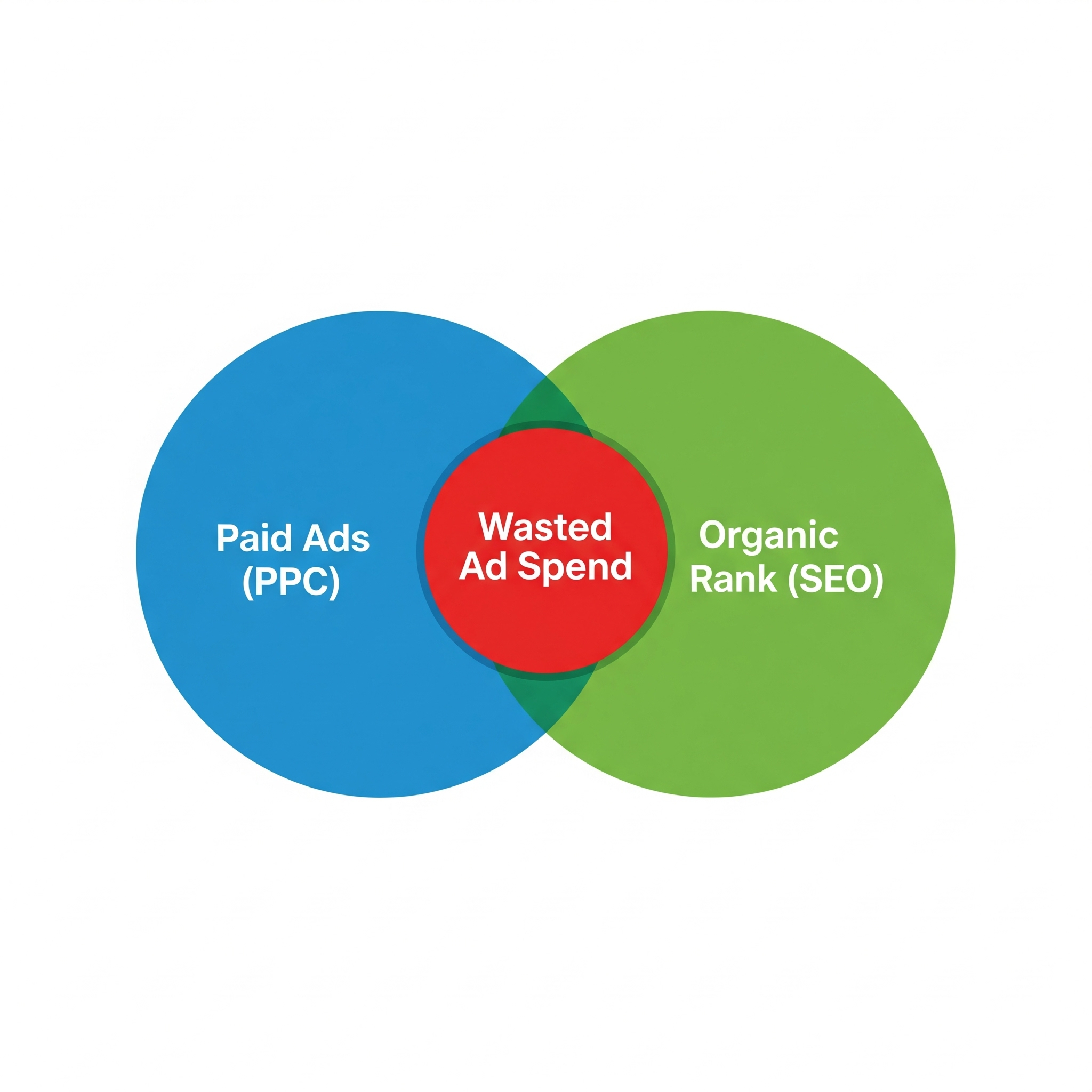
SEO & PPC overlap occurs when you pay for an ad click on a search query where your website already ranks in one of the top organic positions.
Think about it: a user searches for your brand or a key service you offer. They see your paid ad at the top and click it. You pay for that click. But just below it, your website is sitting in the number one organic spot. Would they have clicked that free link if the ad wasn’t there? Very likely. That’s the budget you could be saving and reinvesting.
Why You Can’t Afford to Ignore This Data
Uncovering this overlap isn’t about blindly cutting your ad spend. It’s about making smarter, more strategic decisions with your marketing budget. By digging into the data, you can:
- Identify Genuine Waste: Pinpoint high-cost keywords where you’re simply overpaying for traffic that your strong SEO performance would have captured for free.
- Bid Smarter, Not Harder: Instead of paying a premium for every click, you can strategically lower your bids on terms where you have strong organic visibility, letting your SEO do the heavy lifting. This frees up budget for more competitive areas.
- Achieve SERP Domination: Sometimes, owning both the top ad and the top organic result is a massive power move. It pushes competitors further down the page, builds immense brand credibility, and can significantly increase your total clicks. Knowing where this is happening allows you to double down intentionally, not accidentally.
The problem is, Google doesn’t exactly hand you this report on a silver platter. The data exists, but it’s buried across different platforms.
How to Find the Overlap: A Quick Guide
You don’t need complex developer scripts to get started. While using the Google Ads API is an advanced option, anyone can begin to uncover this data with a bit of manual work.
- Pull Your Google Ads Data: Go into your Google Ads account and run a “Search Terms” report for the last 30-60 days. You’ll want to export the data for Search Term, Clicks, Impressions, and CPC (Cost Per Click).
- Pull Your Search Console Data: In Google Search Console, go to the “Performance” report. Set the same date range and export your “Queries” report, making sure you include Queries, Clicks, Impressions, and Average Position.
- Combine and Analyse: Now for the important part. In a spreadsheet (using a VLOOKUP or similar function), combine these two reports by matching the “Search Term” from Ads with the “Query” from Search Console.
You are looking for rows that show:
A high CPC in your Ads report.
An Average Organic Position of 1, 2, or 3 in your Search Console report.
When you find these, you’ve found your overlap and a potential source of wasted budget.
You Found It… Now What? Strategic Decisions
Once you have the data, you can make informed choices:
- For Branded Searches: If you rank #1 organically for your own brand name but are still paying a high CPC, you can confidently reduce your bids. Your customers are already looking for you.
- For High-Intent Keywords: If a keyword is highly competitive and crucial for conversions, owning both the ad and the organic spot might be the best strategy for SERP domination. This is a deliberate choice, not an accident.
- For Informational Keywords: If you rank highly for a “how-to” or informational query, you might decide to pull back on ad spend for that term, as the user is likely in a research phase and the organic result will serve them well.
The Expert Solution: Stop Guessing, Start Optimising
Let’s be honest—this process is time-consuming, and interpreting the data requires a deep understanding of both SEO and PPC. Making the wrong call could mean losing valuable traffic.
This is where partnering with a specialist marketing agency is invaluable. At The Shift Labs, we live and breathe this data. We don’t just run siloed SEO or Google Ads campaigns; we create a unified strategy where every part works in harmony. We conduct these audits regularly to ensure your budget is being invested, not wasted.
Instead of spending hours in spreadsheets, you can have a team of experts continuously optimising your accounts for maximum efficiency and growth.
Ready to find out if your ad budget is working as hard as it should be? Visit Our Website to Book a call to learn more about our data-driven approach.
Leave a Reply